Showing posts with label kuari pass trek. Show all posts

Friday, 21 August 2026

7 Himalayan Treks Compared: Pangarchulla, Kedarkantha, Aancha Top, Patalsu, Nag Tibba, Gulabi Kantha & Kuari Pass

 If you've been scrolling through trekking sites trying to decide between Pangarchulla, Kedarkantha, Aancha Top, Patalsu Peak, Nag Tibba, Gulabi Kantha, and Kuari Pass, you're not alone — these seven are among the most talked-about treks out of Uttarakhand and Himachal Pradesh right now, ranging from easy weekend escapes to full-blown summit expeditions. This guide puts them side by side so you can pick the one that actually fits your fitness level, time off, and appetite for adventure.

Quick Comparison Table

TrekRegionMax AltitudeDistanceDurationDifficultyBest Time
Pangarchulla PeakGarhwal, Uttarakhand (Joshimath)~15,069–15,100 ft (4,600 m)40–45 km6–7 daysModerate to DifficultMid-Mar–May (snow), Sep–Nov (clear)
KedarkanthaUttarkashi, Uttarakhand (Sankri)12,500 ft (3,810 m)20–25 km5–6 daysEasy to ModerateDec–Apr (snow), Sep–Nov (clear)
Aancha TopYamunotri Valley, Uttarakhand (Ranachatti)~12,500–12,525 ft (3,818 m)24–28 km5–6 daysEasy to ModerateApr–Jun, Sep–Nov, Dec–Feb (snow)
Patalsu PeakKullu Valley, Himachal Pradesh (Solang)~13,845–13,990 ft (4,220 m)14–18 km3–4 daysEasy to Moderate (steep finish)May–Oct (avoid Jul–Aug monsoon)
Nag TibbaGarhwal, Uttarakhand (Pantwari)9,915 ft (3,022 m)15–18 km2 days / 1 nightEasy to ModerateYear-round; Oct–Mar for snow
Gulabi KanthaYamunotri Valley, Uttarakhand (Hanuman Chatti)~12,000–13,200 ft (3,658–4,023 m)20–28 km4–5 daysEasy to ModerateMar–Jun, Sep–Nov
Kuari PassGarhwal, Uttarakhand (Joshimath)~12,516 ft (3,815 m)33–35 km5–6 daysEasy to ModerateNov–Mar (snow), Mar–May & Sep–Nov

(Note: altitude, distance, and duration figures vary slightly across trek operators depending on the exact route and itinerary chosen — the ranges above reflect that spread.)


1. Pangarchulla Peak Trek — The Real Summit Challenge

Pangarchulla is the outlier on this list: it's not a "pass" or a "top," it's an actual Himalayan summit at roughly 15,100 ft, and it's usually done as an extension of the Kuari Pass trek from Joshimath. The trail runs through Tugasi, Gulling, and Khullara before the summit push, which starts around 2–3 AM and can take 10–16 hours round trip over boulder fields, moraines, and — especially in spring — steep snow slopes and a narrow ridge with drops on either side.

  • Who it's for: Trekkers who've already done a Kedarkantha or Kuari Pass and want to step up to something closer to mountaineering, without needing technical gear or ropes.
  • Highlight: A genuine 360° amphitheatre view of Nanda Devi, Dronagiri, Kamet, Chaukhamba, and Trishul from the summit — arguably the best peak panorama on this whole list.
  • Watch out for: This is the toughest trek here. Prior high-altitude trekking experience is strongly recommended, and the summit day alone can rival the total effort of some entire treks below.

2. Kedarkantha Trek — India's Favourite Winter Summit

Kedarkantha, from Sankri in the Uttarkashi district, is the trek most Indians do first. It's a genuine snow summit at 12,500 ft, but the ascent is gradual and spread over 5–6 days, which keeps it firmly in "beginner-friendly" territory even though summit day itself runs 7–9 hours.

  • Who it's for: First-time Himalayan trekkers, families with teens, and anyone who wants a snow-covered trail without technical difficulty.
  • Highlight: The frozen Juda Ka Talab lake, dense pine and oak forests, and a proper 360° summit view of Swargarohini, Bandarpoonch, and Black Peak — all with excellent trail infrastructure and well-established operators.
  • Watch out for: Because it's so popular, campsites can get crowded in peak winter (late Dec–early Jan); book well ahead if you want the classic snow experience.

3. Aancha Top Trek — The Offbeat Alternative to Kedarkantha

Aancha Top is a newer, far less crowded trail in the Yamunotri Valley starting from Ranachatti village. At almost the same altitude and difficulty as Kedarkantha, it's being marketed as its quieter cousin — same snow-summit thrill, a fraction of the footfall.

  • Who it's for: Trekkers who loved the idea of Kedarkantha but want solitude, or repeat Himalayan visitors looking for something less commercialized.
  • Highlight: Three glacial lakes on the Dinnala Bugyal meadow, a genuine ridge walk to the summit, and 360° views spanning Bandarpoonch, Swargarohini, Kedarnath, Gangotri, and Srikantha — a wider sweep than many better-known treks offer.
  • Watch out for: Being newer and less developed, infrastructure (campsites, marked trails) is thinner, so going with an experienced local operator matters more here than on the established routes.

4. Patalsu Peak Trek — Manali's Short, Punchy Summit

The odd one out geographically — Patalsu is in Himachal Pradesh, not Uttarakhand — Patalsu Peak rises above Solang Valley near Manali to about 13,900 ft. It's notable for packing a genuine high-altitude summit into just 3–4 days, with a steep final push through moraines and narrow ridges.

  • Who it's for: Trekkers short on time (it's easily combined with a regular Manali holiday) or those training for bigger 5,000–6,000 m peaks like Friendship Peak or Stok Kangri.
  • Highlight: Fast altitude gain to a genuine 4,220 m summit with views of Hanuman Tibba, Deo Tibba, Indrasan, and the Dhauladhar and Pir Panjal ranges — a lot of payoff for a short trip.
  • Watch out for: Ratings swing from "easy" to "moderate to difficult" across operators — the steep, rocky final stretch to the summit is genuinely more demanding than the early forest sections suggest, so don't be lulled by day one.

5. Nag Tibba Trek — The Weekend Warm-Up

Nag Tibba, near Pantwari village close to Mussoorie, is the shortest and most accessible trek on this list — a genuine weekend trip from Delhi or Dehradun, doable in 2 days with no technical sections at all.

  • Who it's for: Absolute first-timers, families with kids, or anyone squeezing a Himalayan trek into a two-day window.
  • Highlight: Camping under an exceptionally starry sky at "Serpent's Peak," with views of Bandarpoonch, Swargarohini, Kedarnath, and Gangotri — a lot of scenery for very little time investment.
  • Watch out for: Precisely because it's so short, don't expect the deep immersion or high-altitude drama of the longer treks on this list — it's a taster, not a summit expedition.

6. Gulabi Kantha Trek — The Pink Meadow Secret

Gulabi Kantha ("Pink Ridge") starts from Hanuman Chatti in the Yamunotri Valley and climbs to a high-altitude meadow named for the rhododendron blooms that turn the trail pink in spring. Altitude estimates vary quite a bit by operator (from around 12,000 ft to over 13,000 ft), which suggests slightly different endpoints are being marketed under the same name — worth confirming the exact itinerary before booking.

  • Who it's for: Trekkers chasing rhododendron season (March–June) or anyone wanting an offbeat, uncrowded alternative to Kedarkantha/Dayara Bugyal-style meadow treks.
  • Highlight: Sunrise and sunset that genuinely bathe the meadow in a pink-purple glow, plus views of Bandarpoonch, Kedarkantha peak, Chaukhamba, and Draupadi ka Danda.
  • Watch out for: It's genuinely lesser-known, so trail markings and camp infrastructure are less developed than on Kedarkantha — go with an operator who treks this route regularly.

7. Kuari Pass Trek — The Historic Curzon Trail

Kuari Pass, starting from Joshimath, follows the same route British Viceroy Lord Curzon once explored, and shares its first few days with the Pangarchulla trek. At ~12,516 ft, it's a pass rather than a summit, which makes it considerably gentler than Pangarchulla while covering much of the same jaw-dropping terrain.

  • Who it's for: Trekkers who want Pangarchulla's views (Nanda Devi, Dronagiri, Kamet, Trishul) without Pangarchulla's brutal summit day — or a moderate trek with strong mountaineering pedigree and history.
  • Highlight: Wide, open ridge walks through the Curzon Trail with some of the most complete Himalayan panoramas available at this difficulty level.
  • Watch out for: Because it shares infrastructure and route with Pangarchulla, many operators sell it as a combined "Kuari Pass + Pangarchulla" package — read the itinerary carefully if you only want the easier pass and not the summit add-on.

How to Choose: By Traveller Type

  • First-timer with just a weekend: Nag Tibba
  • First-timer with 5–6 days, want a "real" snow summit: Kedarkantha
  • Want Kedarkantha's experience minus the crowds: Aancha Top or Gulabi Kantha
  • Rhododendron/wildflower season trekker: Gulabi Kantha (Mar–Jun)
  • Short on time but want serious altitude: Patalsu Peak (Manali-based, 3–4 days)
  • Experienced trekker wanting a genuine summit challenge: Pangarchulla
  • Want Pangarchulla's views without the technical summit day: Kuari Pass
  • Training for a 5,000–6,000 m peak: Patalsu Peak or Pangarchulla

Difficulty Ranking (Easiest to Hardest)

  1. Nag Tibba
  2. Kedarkantha
  3. Aancha Top / Gulabi Kantha (roughly tied, both easy-to-moderate)
  4. Kuari Pass
  5. Patalsu Peak
  6. Pangarchulla Peak

A Few Practical Notes Before You Book

  • Altitude sickness: All seven treks cross 9,000 ft, and five of them go past 12,000 ft — acclimatize properly regardless of how "easy" the grading sounds, and don't rush the ascent.
  • Fitness baseline: Most operators expect you to comfortably run/jog 5 km in 30–40 minutes before attempting any of these; Pangarchulla and Patalsu expect more.
  • Permits and guides: Treks inside protected areas (Kedarkantha lies in Govind Pashu Vihar National Park, Pangarchulla skirts Nanda Devi National Park) typically require permits arranged by your trek operator — always book with a registered agency.
  • Newer/offbeat routes (Aancha Top, Gulabi Kantha): Trail marking and campsite infrastructure are still developing, so a locally experienced guide matters more here than on the well-trodden classics.

Whichever you choose, all seven deliver genuine Himalayan payoff — the real decision is how many days you have and how much of a physical challenge you're chasing.

Sunday, 4 December 2022

Treks in Himalya,Dehradun,Uttrakhand.


This image has an empty alt attribute; its file name is IMG_20210723_092226-1024x768.jpg

As I am writing this blog post, the Uttarakhand government has opened up inter-state and inter-district travel post lockdown with certain terms and conditions. It has also lifted all restrictions for international travellers. The impulse to travel, to explore has been brewing for a while since we all got locked up indoors. The tour operators, hotels, homestays, transportation sector are slowly gearing up for the new normal. The actual act of going places though will depend on many criteria including the season in which you would end up feeling comfortable traveling again.

Worry not! The state of Uttarakhand is that perfect destination which fits the bill, come rain or shine. Nearly tropical in the foothills and tundra above the snow line, it rationalizes the call to go on day hikes or multi day treks all year-round. The “Land of Gods” is blessed with five distinct seasons. This offers an opportunity to travel to various locations or return to the same locale to experience it in a totally different setting.

“Spring passes and one remembers one’s innocence.
Summer passes and one remembers one’s exuberance.
Autumn passes and one remembers one’s reverence.
Winter passes and one remembers one’s perseverance.”

Let me build on what Yoko Ono once said.

This image has an empty alt attribute; its file name is DSC_0498-1024x683.jpg

SPRING

‘Vasant Ritu’, the season of innocent young love, rebirth and regrowth. Beginning of March to mid-April, the snow starts receding and it gives way to pleasant weather resulting in new leaf growth and flowers begin to bloom. Apple blossoms paint a delicate picture which would leave you absolutely spell bounded.

This is the time to wake up early at the campsites to enjoy the dawn chorus. Songbirds regale us all with their melodious renditions. Look out for Himalayan woodpecker, Verditer Flycatcher, Warbler varieties, Tree Creeper, Black Bulbul, Black Bird, Blue Whistling Thrush, Rufous Sibia, Russet Sparrow and the likes. It’s a birders paradise. The melting snow drives the gushing streams where you can watch the Plumbeous Redstart dive in for food in the freezing cold waters.

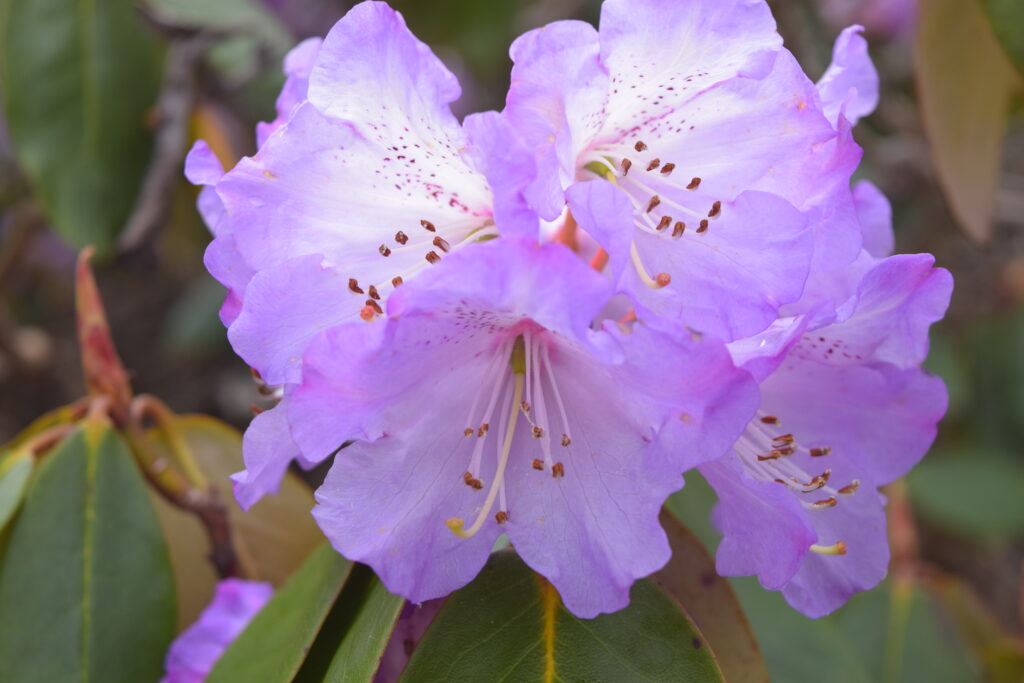
This is also the season of Rhododendrons or ‘Burans’. There are 6 species of this stunning flower in the state. Deoriatal-Chopta-Chandrashila, an easy beginner’s trek, is your best bet to enjoy snow-capped mountain scape with rhododendron laden trees and abundant bird activity.

The treks that climb to over 3,000 m would still have good amount of snow to experience the nature of winter trek. The lower campsites start blossoming making it a very pleasing experience. The usual suspects, the winter treks of Kedarkantha, Nag Tibba, Dayara Bugyal and Mukta Top offer what is best of both worlds.

This image has an empty alt attribute; its file name is valley-landscape.webp

SUMMER

From mid-April or so, is when the higher altitudes buried deep in snow start becoming accessible. The Char Dham yatra commencing usually signals the opening up of passes. The trekking opportunities are aplenty till mid-June. Expect carpets of alpine meadows with the Gujjar community migrating back with their livestock to higher grazing grounds from the Shivalik foothills which are their home for winter. It is incredibly picturesque and you are bound to dance to “The Sound of Music”.

In my opinion, these are the months to test your endurance and take the big leap. The extreme adventurers say ‘summer bodies are made in winter’. If you have put in the effort to prepare yourself physically and mentally, there is nothing like a crossover trek. The passes crossing over from the state of Uttarakhand to Himachal Pradesh or vice versa like Rupin PassBorasu Pass and the less explored Lamkhaga Pass should be high on your wish list. These are also most favoured for the Garhwali and Kinnauri experience they offer.

In addition, there are treks which traverse from one river valley to another within the state. Namely, Bali Pass, a crossover from Tons river valley to Yamuna i.e. Har ki Dun valley to Yamunotri. On offbeat trek like Mayali Pass, which connects Bhagirathi valley to Mandakini valley, witness three alpine lakes and breath-taking views of the Gangotri glacier from the southern side. Dhumdar Kandi is another treacherous trek crossing over from Tons valley to Bhagirathi valley.

If you are all geared up for expedition level trek with basic knowledge of mountaineering, head to the challenging Kalindi Khal. Climbing up to almost 6000 m, it connects the two sacred Dhams of Badrinath and Gangotri.

Treks providing similar challenges include Panpatia col, a crossover from Kedarnath to Badrinath, and Auden’s col which connects Gangotri to Kedarnath.

This image has an empty alt attribute; its file name is Auli-1024x768.webp

MONSOON

July marks the beginning of neon green panoramas all around. The incessant downpour makes most of the trails muddy and slippery till the shoulder month of September. Also, landslides become a common occurrence resulting in roadblocks. So, it is advisable to always have a buffer day planned in your itinerary. This is the time when the treks in Chamoli district come alive.

Valley of Flowers, a popular moderate trek in Bhyundar valley is the most obvious choice to explore the vast expanses of alpine flower meadows. In conjunction you also get an opportunity to hike up to Gurudwara Hemkund Sahib, the highest in the world at 4,300 m. Keep an eye out for Blue Poppy and Brahma Kamal, the pièce de résistance of all the flowers you would come across in the region.

If you wish to travel off the beaten track, head to the emerald green Kagbhushandi Tal, a moderate-difficult offshoot trek climbing up from Bhyundar village providing prominent views of Hathi Parbat.

Head beyond the valley for the difficult crossover of Bhyundar Khal. The highlight of the trek for me would be negotiating moraines and glaciers like Rataban and Tipra.

Kunth Khal is another challenging offshoot trek from Valley of Flowers which only opened again recently in 2016. The walk amongst Brahma Kamal flowers as far as the eyes can see is an unparalleled experience in itself.

From the holy town of Badrinath and the “last village of India” Mana, is a moderate trek to Sathopanth Tal. You trek alongside river Alaknanda to this glacial lake at 4,400m. Here Nilkantha and Balakun peaks give company throughout the trek along with numerous waterfalls.

This image has an empty alt attribute; its file name is thanga-campsite-bali-pass-1024x577.webp

AUTUMN

Come October and the weather becomes crisp and the cloudless skies offer spectacularly clear mountain views. The monsoon shades of green fade away only to give way to dazzling warm shades of amber. The leaves turn golden, lighting up the forest canopy. These also are the best times to do milky way photography. So, this is the season you bring out the big guns, I mean you should head for the big views.

If you are up for the challenge, the trek up to the glacial lake of Kedar Tal in my opinion is the most rewarding one in the autumn month. Feast your eyes to uninterrupted views of Mt. Thalaysagar, Mt. Bhrigupanth and Mt. Jogin. It is a humbling experience to find yourself surrounded with this immensity. The trail will keep your adrenaline pumping with some tricky sections.

Another trek which ticks all the boxes is Gaumukh-TapovanStarting from the holy town of Gangotri it is a huge opportunity to be in the close vicinity of the holiest and mightiest of glaciers of India. The Tapovan meadow brings you to your feet with grand Mt.Shivling standing up in front of you. Also, on the trail enjoy impressive views of Bhagirathi I, II and III.

If you are someone who has the fundamental knowledge of mountaineering, Gupt Khal “the secret pass” is a challenging trek that crosses over the twin passes of Bhyundar Khal and Gupt Khal. The trek also offers close and glorious views of Nilkantha, Hathi, Nilgiri, Rataban, Kamet and Mana peaks.

Har ki Dun-Ruinsara Tal is a trek steeped with culture. On one hand it offers the big views like Mt. Swargarohini and Jaundhar Glacier and on other are these ancient remote villages of Osla, Gangad and Datmir and then add to this mix a high-altitude lake. It is a well-rounded experience. The terrain on the trek is ever changing keeping you alert and guessing. The trek is like a pilgrimage to the mountains as the distances that you cover are substantial. Prepare yourself for long days on this trek.

Also, let me add that all the spring-summer treks are doable in this precious autumn window and vice versa.

This image has an empty alt attribute; its file name is Walking-towards-Kedarkantha-Peak-1024x768.webp

WINTER

It’s the season for building snowman, snowball fights, making snow angels and layering up. Mid Dec onwards mother nature casts fairy dust turning everything monochromatic. Western disturbances bring heavy rain and snow in the region from Jan to Feb. Trekking in these months is possibly the most challenging but fun filled.

Kedarkantha, is possibly the most sought-after trail to trek in the winters in India and why not. The summit climb is rewarded with panoramic views of Mt. Swargarohini, Mt. Bandarpunch, Black peak, Ranglana along with Yamunotri and Gangotri ranges. On summit day the early morning sun rays warm your soul as the views warm your heart. This trek is located in the confines of a national park. During extreme snowfall, always be prepared for the trek to be cut short for safety reasons. Also, the forest authority closes down the park quite often, abruptly ending the season.

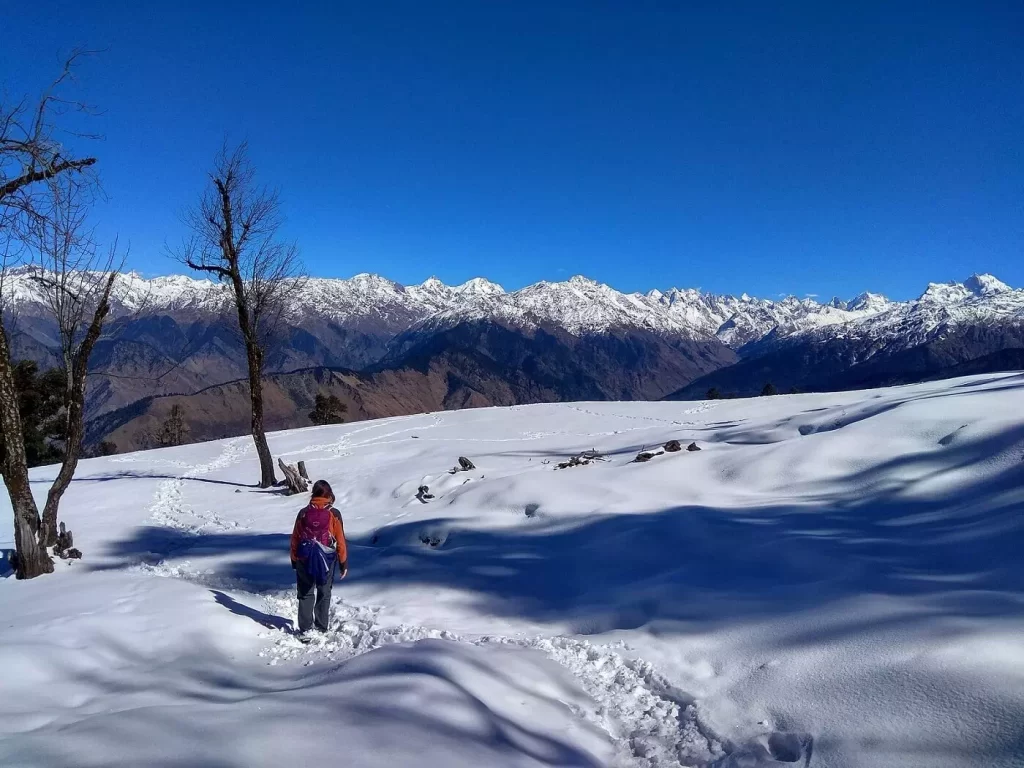
Kuari Pass trek the formerly known as Lord Curzon’s Trail, is most known for offering some unmatched views of Mt. Nanda Devi, Mt. Dunagiri, Mt. Chaukhamba, Mt. Nilkantha, Mt. Hathi-Ghodi, Mt. Nanda Ghunti and more. At 3,820 m the pass is a moderate effort for a prepared trekker. Furthermore, climbing up to Pangarchulla peak adds an exciting element to the trek. Enchanting forest sections and high-altitude villages on the way make this a complete experience in my opinion.

Nag Tibba, a ridge peak located towards the north-east of tourist town of Mussoorie, also offers 360° superlative views of the big mountains like Mt. Bandarpunch, Mt. Swargarohini, Mt. Srikantha along with the rest of the Gangotri mountain range.

The Windows wallpaper meadows of Dayara Bugyal turn pristine white during winters. The undulating snow-covered meadows are an ideal place to ski in the winters or be lost in the sea of white. Gangotri range of mountains are your constant companion on all the campsites and the summit day is a close encounter with Mt. Bandarpunch.

Treks like Dayara BugyalNag TibbaDeoriatal-Chopta-ChandrashilaKedarkantha and Kuari Pass can be done throughout the year avoiding the peak rainy season. Each season brings different set of hues to the landscapes.

I hope now you can make an informed decision on the trek you would embark on in the Uttarakhand region when the pandemic curve flattens and travel becomes safe. Until then I encourage you to keep up with your workout routine. In fact, take this as an opportunity to get better with you mental and physical fitness which would make your experience in the mountains more enjoyable.

Uttarakhand Treks | treks in Uttarakhand | Treks from Dehradun | trekking in Dehradun | Trekking companies in Dehradun | Har Ki  Dun trek | Bali Pass trek Phulara Ridge Trek | Kedarkantha Trek| Winter Kedarkantha Trek |  Kedarkantha Trek in december |Kedarkantha Trek in January | Winter Dayara Bugyal |Dayara Bugyal in December|Dayara Bugyal trek Gaumukh Tapovan  trek Kashmir Great Lakes  trek | Valley of Flowers trek Nag Tibba Trek | Kuari Pass trek | CHOPTA CHANDRASHILA TREK