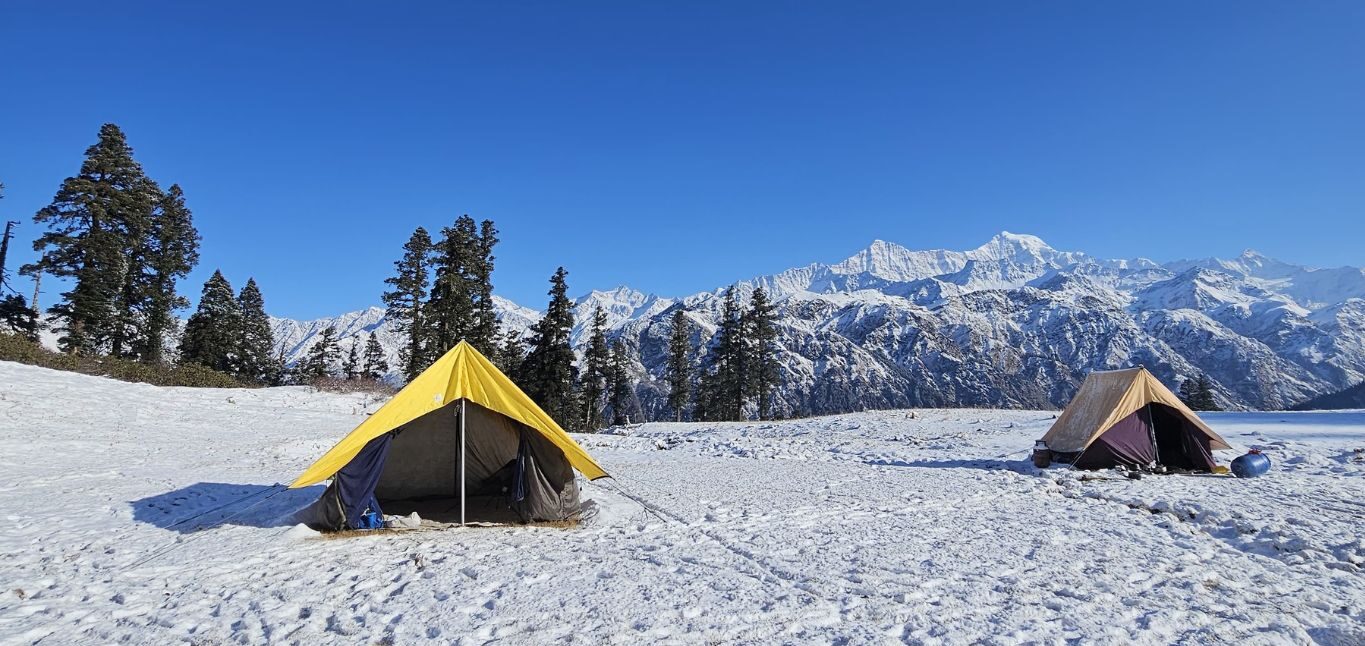
If you've been scrolling through trekking sites trying to decide between Pangarchulla, Kedarkantha, Aancha Top, Patalsu Peak, Nag Tibba, Gulabi Kantha, and Kuari Pass, you're not alone — these seven are among the most talked-about treks out of Uttarakhand and Himachal Pradesh right now, ranging from easy weekend escapes to full-blown summit expeditions. This guide puts them side by side so you can pick the one that actually fits your fitness level, time off, and appetite for adventure.
Quick Comparison Table
| Trek | Region | Max Altitude | Distance | Duration | Difficulty | Best Time |
|---|---|---|---|---|---|---|
| Pangarchulla Peak | Garhwal, Uttarakhand (Joshimath) | ~15,069–15,100 ft (4,600 m) | 40–45 km | 6–7 days | Moderate to Difficult | Mid-Mar–May (snow), Sep–Nov (clear) |
| Kedarkantha | Uttarkashi, Uttarakhand (Sankri) | 12,500 ft (3,810 m) | 20–25 km | 5–6 days | Easy to Moderate | Dec–Apr (snow), Sep–Nov (clear) |
| Aancha Top | Yamunotri Valley, Uttarakhand (Ranachatti) | ~12,500–12,525 ft (3,818 m) | 24–28 km | 5–6 days | Easy to Moderate | Apr–Jun, Sep–Nov, Dec–Feb (snow) |
| Patalsu Peak | Kullu Valley, Himachal Pradesh (Solang) | ~13,845–13,990 ft (4,220 m) | 14–18 km | 3–4 days | Easy to Moderate (steep finish) | May–Oct (avoid Jul–Aug monsoon) |
| Nag Tibba | Garhwal, Uttarakhand (Pantwari) | 9,915 ft (3,022 m) | 15–18 km | 2 days / 1 night | Easy to Moderate | Year-round; Oct–Mar for snow |
| Gulabi Kantha | Yamunotri Valley, Uttarakhand (Hanuman Chatti) | ~12,000–13,200 ft (3,658–4,023 m) | 20–28 km | 4–5 days | Easy to Moderate | Mar–Jun, Sep–Nov |
| Kuari Pass | Garhwal, Uttarakhand (Joshimath) | ~12,516 ft (3,815 m) | 33–35 km | 5–6 days | Easy to Moderate | Nov–Mar (snow), Mar–May & Sep–Nov |
(Note: altitude, distance, and duration figures vary slightly across trek operators depending on the exact route and itinerary chosen — the ranges above reflect that spread.)
1. Pangarchulla Peak Trek — The Real Summit Challenge
Pangarchulla is the outlier on this list: it's not a "pass" or a "top," it's an actual Himalayan summit at roughly 15,100 ft, and it's usually done as an extension of the Kuari Pass trek from Joshimath. The trail runs through Tugasi, Gulling, and Khullara before the summit push, which starts around 2–3 AM and can take 10–16 hours round trip over boulder fields, moraines, and — especially in spring — steep snow slopes and a narrow ridge with drops on either side.
- Who it's for: Trekkers who've already done a Kedarkantha or Kuari Pass and want to step up to something closer to mountaineering, without needing technical gear or ropes.
- Highlight: A genuine 360° amphitheatre view of Nanda Devi, Dronagiri, Kamet, Chaukhamba, and Trishul from the summit — arguably the best peak panorama on this whole list.
- Watch out for: This is the toughest trek here. Prior high-altitude trekking experience is strongly recommended, and the summit day alone can rival the total effort of some entire treks below.
2. Kedarkantha Trek — India's Favourite Winter Summit
Kedarkantha, from Sankri in the Uttarkashi district, is the trek most Indians do first. It's a genuine snow summit at 12,500 ft, but the ascent is gradual and spread over 5–6 days, which keeps it firmly in "beginner-friendly" territory even though summit day itself runs 7–9 hours.
- Who it's for: First-time Himalayan trekkers, families with teens, and anyone who wants a snow-covered trail without technical difficulty.
- Highlight: The frozen Juda Ka Talab lake, dense pine and oak forests, and a proper 360° summit view of Swargarohini, Bandarpoonch, and Black Peak — all with excellent trail infrastructure and well-established operators.
- Watch out for: Because it's so popular, campsites can get crowded in peak winter (late Dec–early Jan); book well ahead if you want the classic snow experience.
3. Aancha Top Trek — The Offbeat Alternative to Kedarkantha
Aancha Top is a newer, far less crowded trail in the Yamunotri Valley starting from Ranachatti village. At almost the same altitude and difficulty as Kedarkantha, it's being marketed as its quieter cousin — same snow-summit thrill, a fraction of the footfall.
- Who it's for: Trekkers who loved the idea of Kedarkantha but want solitude, or repeat Himalayan visitors looking for something less commercialized.
- Highlight: Three glacial lakes on the Dinnala Bugyal meadow, a genuine ridge walk to the summit, and 360° views spanning Bandarpoonch, Swargarohini, Kedarnath, Gangotri, and Srikantha — a wider sweep than many better-known treks offer.
- Watch out for: Being newer and less developed, infrastructure (campsites, marked trails) is thinner, so going with an experienced local operator matters more here than on the established routes.
4. Patalsu Peak Trek — Manali's Short, Punchy Summit
The odd one out geographically — Patalsu is in Himachal Pradesh, not Uttarakhand — Patalsu Peak rises above Solang Valley near Manali to about 13,900 ft. It's notable for packing a genuine high-altitude summit into just 3–4 days, with a steep final push through moraines and narrow ridges.
- Who it's for: Trekkers short on time (it's easily combined with a regular Manali holiday) or those training for bigger 5,000–6,000 m peaks like Friendship Peak or Stok Kangri.
- Highlight: Fast altitude gain to a genuine 4,220 m summit with views of Hanuman Tibba, Deo Tibba, Indrasan, and the Dhauladhar and Pir Panjal ranges — a lot of payoff for a short trip.
- Watch out for: Ratings swing from "easy" to "moderate to difficult" across operators — the steep, rocky final stretch to the summit is genuinely more demanding than the early forest sections suggest, so don't be lulled by day one.
5. Nag Tibba Trek — The Weekend Warm-Up
Nag Tibba, near Pantwari village close to Mussoorie, is the shortest and most accessible trek on this list — a genuine weekend trip from Delhi or Dehradun, doable in 2 days with no technical sections at all.
- Who it's for: Absolute first-timers, families with kids, or anyone squeezing a Himalayan trek into a two-day window.
- Highlight: Camping under an exceptionally starry sky at "Serpent's Peak," with views of Bandarpoonch, Swargarohini, Kedarnath, and Gangotri — a lot of scenery for very little time investment.
- Watch out for: Precisely because it's so short, don't expect the deep immersion or high-altitude drama of the longer treks on this list — it's a taster, not a summit expedition.
6. Gulabi Kantha Trek — The Pink Meadow Secret
Gulabi Kantha ("Pink Ridge") starts from Hanuman Chatti in the Yamunotri Valley and climbs to a high-altitude meadow named for the rhododendron blooms that turn the trail pink in spring. Altitude estimates vary quite a bit by operator (from around 12,000 ft to over 13,000 ft), which suggests slightly different endpoints are being marketed under the same name — worth confirming the exact itinerary before booking.
- Who it's for: Trekkers chasing rhododendron season (March–June) or anyone wanting an offbeat, uncrowded alternative to Kedarkantha/Dayara Bugyal-style meadow treks.
- Highlight: Sunrise and sunset that genuinely bathe the meadow in a pink-purple glow, plus views of Bandarpoonch, Kedarkantha peak, Chaukhamba, and Draupadi ka Danda.
- Watch out for: It's genuinely lesser-known, so trail markings and camp infrastructure are less developed than on Kedarkantha — go with an operator who treks this route regularly.
7. Kuari Pass Trek — The Historic Curzon Trail
Kuari Pass, starting from Joshimath, follows the same route British Viceroy Lord Curzon once explored, and shares its first few days with the Pangarchulla trek. At ~12,516 ft, it's a pass rather than a summit, which makes it considerably gentler than Pangarchulla while covering much of the same jaw-dropping terrain.
- Who it's for: Trekkers who want Pangarchulla's views (Nanda Devi, Dronagiri, Kamet, Trishul) without Pangarchulla's brutal summit day — or a moderate trek with strong mountaineering pedigree and history.
- Highlight: Wide, open ridge walks through the Curzon Trail with some of the most complete Himalayan panoramas available at this difficulty level.
- Watch out for: Because it shares infrastructure and route with Pangarchulla, many operators sell it as a combined "Kuari Pass + Pangarchulla" package — read the itinerary carefully if you only want the easier pass and not the summit add-on.
How to Choose: By Traveller Type
- First-timer with just a weekend: Nag Tibba
- First-timer with 5–6 days, want a "real" snow summit: Kedarkantha
- Want Kedarkantha's experience minus the crowds: Aancha Top or Gulabi Kantha
- Rhododendron/wildflower season trekker: Gulabi Kantha (Mar–Jun)
- Short on time but want serious altitude: Patalsu Peak (Manali-based, 3–4 days)
- Experienced trekker wanting a genuine summit challenge: Pangarchulla
- Want Pangarchulla's views without the technical summit day: Kuari Pass
- Training for a 5,000–6,000 m peak: Patalsu Peak or Pangarchulla
Difficulty Ranking (Easiest to Hardest)
- Nag Tibba
- Kedarkantha
- Aancha Top / Gulabi Kantha (roughly tied, both easy-to-moderate)
- Kuari Pass
- Patalsu Peak
- Pangarchulla Peak
A Few Practical Notes Before You Book
- Altitude sickness: All seven treks cross 9,000 ft, and five of them go past 12,000 ft — acclimatize properly regardless of how "easy" the grading sounds, and don't rush the ascent.
- Fitness baseline: Most operators expect you to comfortably run/jog 5 km in 30–40 minutes before attempting any of these; Pangarchulla and Patalsu expect more.
- Permits and guides: Treks inside protected areas (Kedarkantha lies in Govind Pashu Vihar National Park, Pangarchulla skirts Nanda Devi National Park) typically require permits arranged by your trek operator — always book with a registered agency.
- Newer/offbeat routes (Aancha Top, Gulabi Kantha): Trail marking and campsite infrastructure are still developing, so a locally experienced guide matters more here than on the well-trodden classics.
Whichever you choose, all seven deliver genuine Himalayan payoff — the real decision is how many days you have and how much of a physical challenge you're chasing.